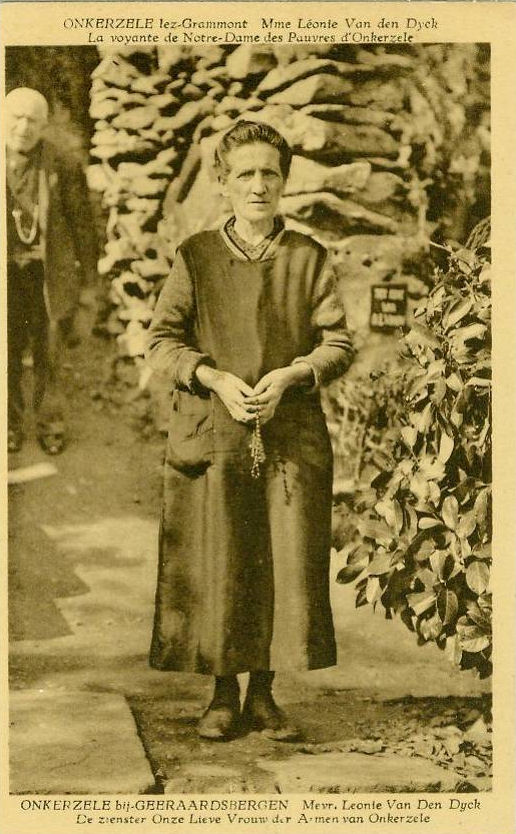
Interview with Patrick Bernauw about Leonie Van Den Dijck
Reading time: 4–5 minutes.
After the success of their first joint (youth) book, The Treasure of Orval (1992), Patrick Bernauw and Guy Didelez began searching for a new subject. Their collaboration had left them wanting more. During one of their conversations, Patrick mentioned a childhood memory that had long fascinated him: a bizarre television report about the exhumation of Leonie Van Den Dijck, the Seeress of Onkerzele. What began as a childhood recollection became the starting point for their next book — and ultimately led to a striking synchronicity in Bernauw’s career.
Patrick, after The Treasure of Orval, you and Guy Didelez were looking for a new subject. How did you arrive at the memory of Leonie Van Den Dijck, and why did her story appeal to you as a starting point for a book?
I told Guy about a television report I had seen in 1972, when I was ten years old. It was an episode of the program Echo, in which Jan Van Rompaey and his camera crew stood in the cemetery of Onkerzele. They were exhuming the body of Leonie Van Den Dijck. Before her death, in 1949, she had predicted that her body would not decompose. They wanted to verify whether that prediction had come true.
I still vividly remembered those images when I told Guy about them — or at least, I think I did. What was truly shown and what my imagination later added, I can no longer say with certainty. But precisely that tension — between memory and imagination — is, for me, the very core of magical realism.
In my memory, Leonie’s grave lay open, the camera zoomed in. I saw a white shroud (though it was black-and-white television, so pink would also have appeared white). The camera moved upward, and there was a face. Not a beautiful face. Leonie would never have won a beauty contest, even if such contests had existed then. She was already elderly when she died; her mouth had fallen slightly open, and I remember that you could clearly see a single tooth. Beneath her head lay a Bible. It was a chilling image that haunted me afterwards.
I had nightmares in which Leonie, wrapped in her white shroud, rose from her grave and chased me. It would have taken her quite some time to devour me with that one tooth. Children found the story hilarious, but I told it to adults as well. And although I now suspect I invented certain details, it still feels as if it all truly happened.
With that memory suddenly resurfacing, we immediately began gathering information. Leonie Van Den Dijck would become our new writing project. Guy plunged into the archives, while I found references to her in several books.
Leonie was a seeress: in 1933 she claimed on several occasions to see the Virgin Mary in Onkerzele. No one else saw her — but Leonie did. Tens of thousands of people flocked to Onkerzele — on foot, by bicycle, bus, or car. Fields and roads filled with the curious who wanted to see what only Leonie could see. And then something remarkable happened. Something we might today describe as a UFO apparition, but in a religious context it was called a sun miracle: a luminous sphere appeared from the sun, circled the church tower, and disappeared behind a hedge. Hundreds of people claimed to have seen this, and their accounts were strikingly consistent. Some even said they smelled the scent of roses.
Despite her many predictions and the strange events surrounding them, Leonie was increasingly taken less seriously. She faced sharp criticism, and her statements were often distorted or ridiculed in the press. Eventually she withdrew to her modest worker’s cottage in Kampstraat in Onkerzele, where she made predictions only for friends and acquaintances. She predicted, among other things, the death of Queen Astrid (in an accident), the murder of King Albert (who, according to her, was pushed from a rock in Marche-les-Dames), the outbreak of the Second World War — and even the end of the world, which she said would occur in 1975. That last prediction, we now know, proved incorrect.
One of her confidants was Gustaaf Schellink from Aalst, who worked for the city. He became her biographer and meticulously documented everything she experienced. He first wrote down her visions and predictions in a manuscript, later reworking them into a typescript of some four hundred pages. Following her exhumation, he produced about a hundred stenciled copies, which he circulated privately. For us it was immediately clear: we had to find one. But no matter how hard we searched, we failed. I phoned every Schellink listed in the telephone directory, but none knew a Gustaaf. Eventually we concluded: this is a dead end — we must look for another project.
But the very next day, at a reception hosted by the publisher Davidsfonds-Infodok, where Guy and I published our youth books, I struck up a conversation at the buffet with a certain Jacques Van Mello. He mentioned he was from Geraardsbergen. “Ah,” I smiled, “then perhaps you know Leonie Van Den Dijck?” “Oh yes,” he said, “I still have a stack of those stencils somewhere. My father bought them when she was exhumed.” The following day, Guy and I immediately visited him. And there it was. The famous typescript. Those four hundred pages we had been searching for so long.
For me, that typescript was an unmistakable synchronicity. At the very moment we had given up, the document came our way as if of its own accord. Without that coincidence, we might have lost Leonie Van Den Dijck’s trail forever.
That unexpected turn even led to two books. First came The Exhumed Oracle, the non-fiction work by Guy and me, published by Manteau in 1993.
At the same time, we wrote a historical youth thriller about the murder of King Albert I, likewise inspired by Leonie’s story. Without her visions, predictions, and the mystery surrounding her life, we would never have delved into that history. What began as a childhood memory ultimately became a defining source of inspiration in my writing career.
Interview, editing and publication by Hanna Brems.
Latest contributions
Patrick and Peter Explore Mysterious Erembodegem
A walk with a magical realist in mysterious Erembodegem. What makes Erembodegem so mysterious? The trees, shrubs, and winding paths in the village […]
The Mystery of Marville
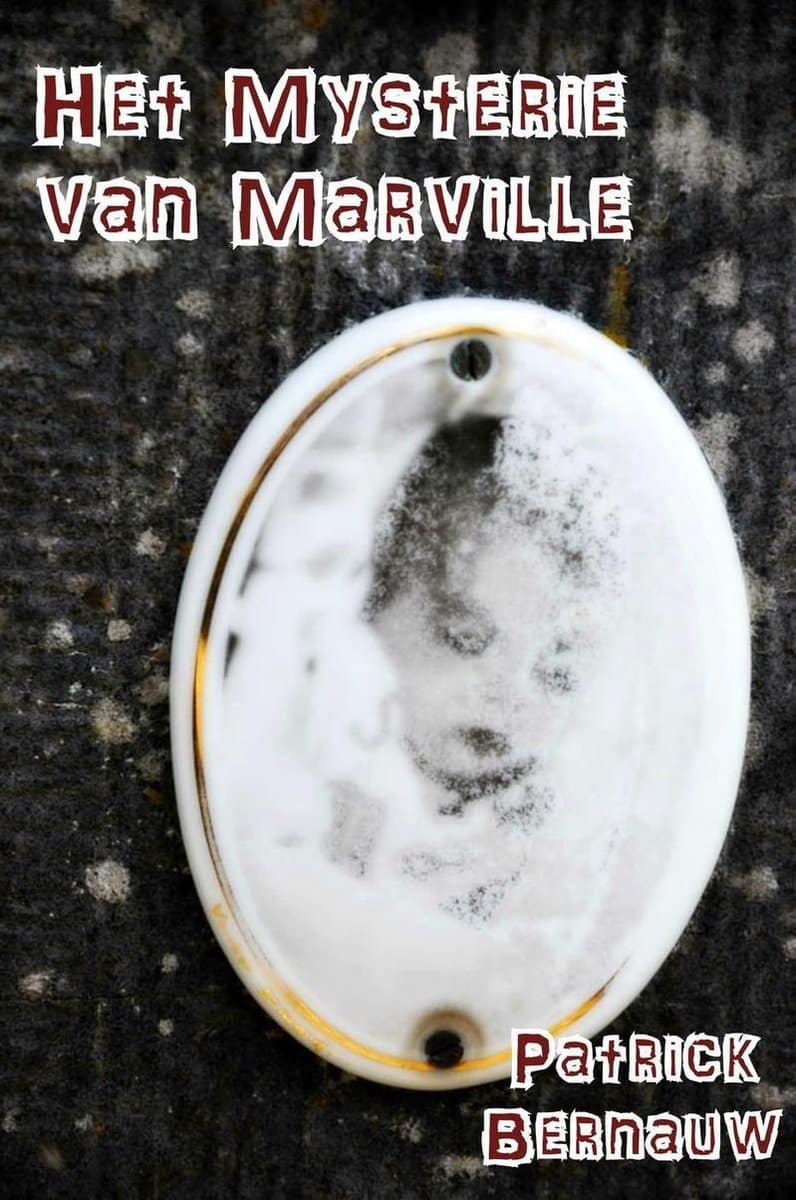
The Mystery of Marville In The Mystery of Marville, Patrick Bernauw investigates a dark enigma from the 1950s and 1960s: in the cemetery of Marville, […]
A Door Has Opened
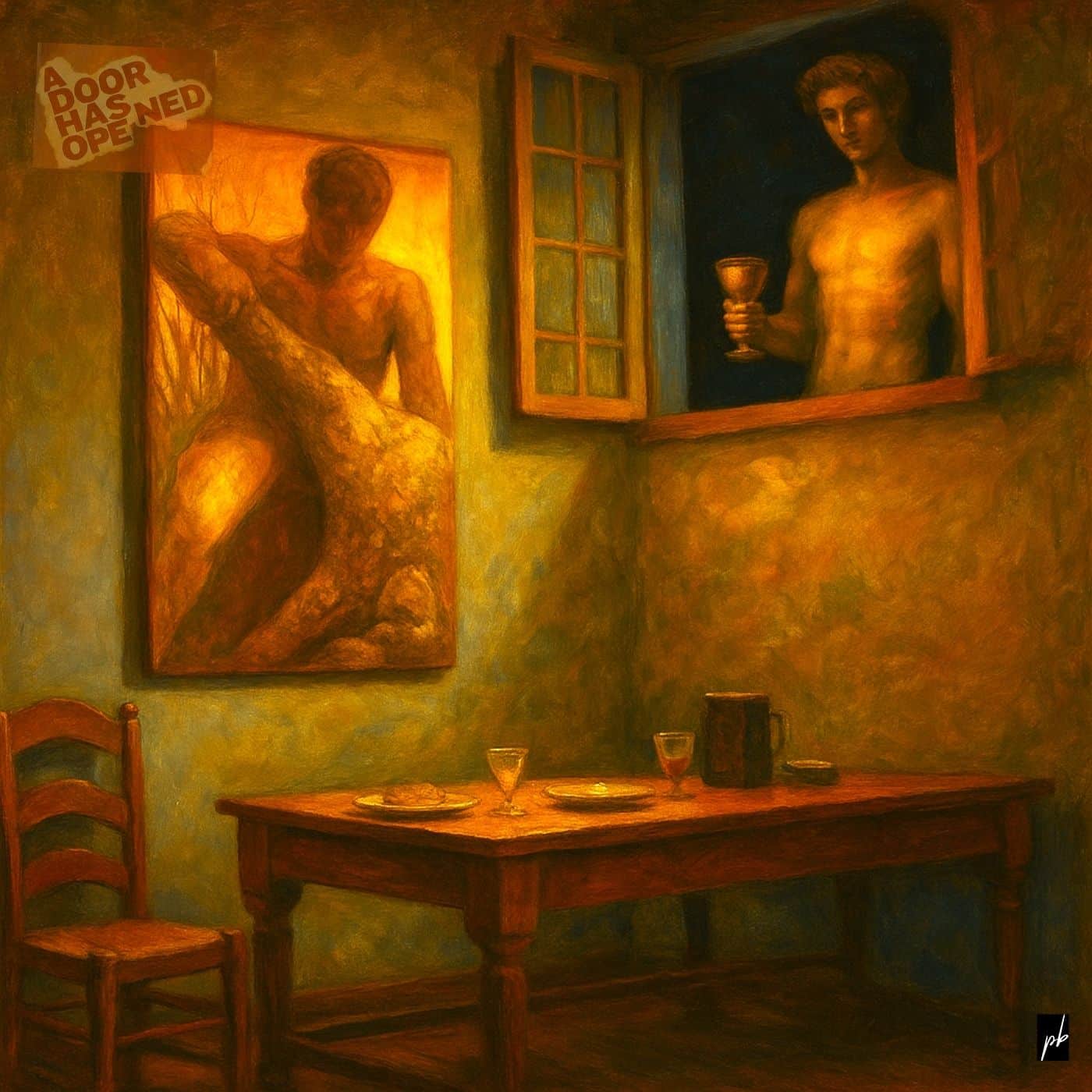
A Door Has Opened Dear Reader, It began with an ordinary table. Dinner set, glasses faintly shining, wine breathing in its jug. A chair slightly […]
About the writer
Other works by our writers
- June 2026 (2)
- May 2026 (1)
- February 2026 (2)
- January 2026 (1)
- December 2025 (2)
- November 2025 (5)
- October 2025 (6)
- September 2025 (4)
- August 2025 (12)
- July 2025 (2)
- March 2025 (3)
- December 2024 (8)
- November 2024 (5)
- April 2024 (32)
- January 2024 (1)
- December 2023 (1)
- February 2022 (13)
- December 2021 (5)
- November 2021 (4)
- May 2021 (1)
- February 2021 (3)
- January 2021 (5)
No comments have been posted yet!