
Little Prince New
“Hi dad! Dad?? Hello I was just eating.”
“That’s late. Were you on duty?”
“No, I ate my soup around eight and then I wait until I get hungry again. Blood sausage with red cabbage, do you like that?”
“Not my favourite food, dad.”
“That way I know. What is favourite?”
“Lots of things. I’m crazy about Italian.”
“Mozzarella, balsamic, oregano?”
“Yep, completely good.”
“Olive oil, thyme, dried tomatoes?”
“Also delicious.”
“Then we must organise that sometime so that I can cook for you. Education cannot exist without nourishment.”
“Maybe that’s not such a bad idea. What else do you like?”
“Bach, Mozart, Mahler.”
“And more?”
“Opera, putting boys in the bath, tenderness, emotion, reading about cultural history. Teresa of Ávila, John of the Cross, Rumi, Hafiz, Khayyam.”
“Have you already put many boys in the bath?”
“I can count them on my two hands, but I’ve only been doing it for a few months. Virtually I don’t count. You are not yet included in the statistics.”
“Two hands is still ten.”
“More than five, less than ten. The oldest was well into his sixties. The youngest nineteen.”
“It must have been quite a horny affair.”
“Above all tender and full of attention. I always listen to the boys. They usually like that.”
“About which subjects?”
“What interests them. What they did that day. Responding to every question with attention and knowledge.”
“Sex in second place?”
“Yes of course, I always adapt. Somehow sex always comes into it; I don’t know why. I think the boys need that once in a while.”
“It’s simply nice.”
“Yes, pleasant. We always make it cosy. A boy who cannot be cosy does not get in.”
“You need sex too, don’t you?”
“I need it very much, but I get my share now. That was not always the case, and that is why I enjoy it twice as much.”
“So you have something to catch up on.”
“Yes, that was the feeling I had, but it is gone now. As long as things may continue to go well.”
“That’s a question for everyone.”
“Yes, but I enjoy things beautifully now, more than ever before, and I would like to share that feeling with a well-brought-up boy. It always goes in three here: education, emancipation, civilisation.”
“What do you understand by emancipation?”
“It is a beautiful Dutch word for emancipation: going to the point where you can make your own decisions.”
“Ah, clear. And you like to play a role in that?”
“That is necessary to conclude the education and prepare your child for civilisation, and I very much like to play a role in that. There is nothing nicer than raising children, and boys of course.”
“Especially boys.”
“Emancipation also means that you eventually let each other go again. You seem to understand me well and that pleases the father.”
“You are a sweet father.”
“To understand each other, that is the most beautiful thing, isn’t it? I have received so much that from time to time I want to pass something on.”
“Yes, and if you do not understand each other then at least you must show respect.”
“Yes, we can also disagree, but then you talk about it. It is not about who is right but about being able to stand autonomously in life. Oops, difficult word.”
“My knowledge still reaches that far.”
“Yes, I always do my best to be understandable for my little son. You are quite clever, I have noticed.”
“Thanks for the compliment, dad. I do my best.”
“Sensible, beautiful and vulnerable: that is always the winning combination. Then the father goes down on his knees.”
“You are rich when you are healthy and happy, that’s my opinion.”
“And when you have good friends, and I have them, and a little son.”
“You have a virtual one in any case.”
“Sweetheart.”
“You are sweet too.”
“You are enterprising, and the father likes that.”
“I like to try things.”
“A lively little fellow, curious and witty.”
“You make me blush, dad.”
“And many fantasies too, which is always pleasant. I enjoy that.”
“You are a fine enjoyer.”
“There is nothing more beautiful, I think, except a good book. Enjoying the right things.”
“Addicted to reading?”
“Shared joy is double joy. Shared sorrow is half sorrow.”
“You’re right.”
“I read far too little these last years, but still always a little.”
“As long as there are enough other things to balance it.”
“The whole creation is a book that we may read page after page. In the last weeks I have been busy with a very exciting chapter.”
“From creation?”
“Yes, we can love the Creator in His creation, through the agency of His creatures, and that is what I am doing now. I overflow with love, truly.”
“A subject you never get out of.”
“I do not need to get out of it.”
“Then you believe, that is good for you.”
“Yes, certainly. I also took a long time to arrive there. Believers doubt just as much as others; that is not where the difference lies, but you know that there is a Thou, and in that way you are never completely alone.”
“So you do not doubt that?”
“I have my moments of fear and doubt, although these moments of panic are now becoming rare, but every boy is a reflection of the beauty of the universe and every creature a work of art of God.”
“And you want to cherish that.”
“Yes, I want to caress and stroke it as far as lies in my power, quietly watching and listening to what such a boy does, for example.”
“And touching?”
“If the boy allows it. Always ask first. Usually it is allowed, but everyone has things that are not possible.”
“Dear dad.”
“Yes, boy?”
“I just had to call you dear dad.”
Hairstyle
XXX
Beautiful Day, Tarcisse
While leaving the apartment building my eye falls on a strange announcement.
In the hall hangs a notice that a child’s corpse has been found, wrapped in a plastic bag in the nearby park, and that whoever knows more about it should report themselves. I shrug my shoulders and get into the car. It is delightful to drive around the city today in sunny weather.
Spring is coming and for the first time it is warm. I drive around with the wound of love beating in my heart. I am on my way from one patient to another and I come from an African man with AIDS who is cared for at home in a housing project. I am always astonished at how the people there manage it and daily give shape to the care of this vulnerable human being.
A bent black man with emaciated shoulders and a swollen belly. He is always very courteous but little talkative. Tarcisse became psychotic at the time of the massacres in his country, which does not make the tasks of care any lighter, but in any case he can stay here in a homely atmosphere.
The employee with whom I usually dealt has left the place. There is a new one, a small slender thing but with spirit. Many employees do not last for years in that sector and perhaps it is also something one should not do one’s whole life.
It is a heavy task to care for very sick people who sometimes also die, and that in turn means that one must learn to say goodbye. Unfortunately that is how life is and against death we can only deploy that small measure of love and care.
Even when it concerns a damaged African man washed ashore in Belgium after a war situation in which his family was slaughtered. Whether he reacts psychotically to that or has always been psychotic cannot be determined and is not important either.
A shadow of death hangs over him that sometimes draws nearer and then withdraws again, as can be read from the regularly recurring laboratory results in the file which fluctuate downward.
It is already a miracle that he is still here. When I first came to know him, a year or two ago, I did not give him five days more. He went to the hospital and there they patched him up again and provided him with a scheme for taking medicines that assumes astonishing proportions.
The good man swallows three drugs against the retrovirus but in addition also considerable psychiatric medication, and on top of that antifungal agents, antibiotics and a stomach-protecting preparation to be able to process it all.
All this has proved necessary to keep him alive. That has succeeded and he is reasonably autonomous. He goes outside and by his own strength reaches the African neighbourhood and back again.
Lately he had rather a lot of dizziness and therefore a home visit was requested, but otherwise things are going excellently.
It is now becoming a little less, but still he has been holding out for years and is capable of forming meaningful human relations despite all disadvantages and opposition because of the virus and the waves of mental confusion.
He is always very courteous and friendly and by now he knows me well, knows perfectly well who I am and what I can do for him. Beyond that the conversation does not go far: how he is doing and how he feels. Have a nice day, Tarcisse.
Drive
The city is new and fresh and people walk lightly dressed.
Arab boys with closely shaven heads bearing the scars of the times they fell as children. Mothers with prams. I find pleasure in stopping at every zebra crossing whenever pedestrians are anywhere in sight, letting everyone cross safely with patience and pleasure.
The stroke has given me a warning that I myself am finite, and that heightens the beating of the wound of love, just like the restored relations with Little Prince Sixteen who suddenly comes to brighten my old age. How do I know whether he is psychotic or normal if I cannot see him, and even then what does the answer to that question mean?
While driving I enjoy the city and my mind becomes calm. I like those chronic patients so much, there is no denying it. A bond of care and love has grown and sometimes I would like to embrace them when I see how they struggle and fight to remain alive in a dignified manner.
How people continue to care for each other on the basis of conviction and willpower. How life around it flourishes abundantly and lifts itself toward the light of the returning sun.
In the rented little car, a small diesel Peugeot, the radio is blaring and apart from news about the war I suddenly get a piece of reggae.
I roll down the window and enjoy it. “Seize the sweetness of being and not the long life,” says Hafiz.
My happiness is complete when shortly afterwards Anneke Grönloh storms through the ether with Brandend Zand. Strange: it is a song hardly known in Belgium and never played, and it certainly does not belong to the playlist of Studio Brussel.
Apparently everyone has gone mad. Joy lies over the city like a strange occupation. Women wear short skirts, at least the westernised ones. Men walk with bare arms. A queer with a little dog and a fashionable backpack for example—very beautiful arms, I must admit. Everyone seems to be advertising themselves on this first sunny afternoon.
This morning I chose a beige suit, a red shirt with white stripes and a tie that perfectly reconciles the two main colours in a checkered pattern. I myself want to be a joy for others today in these oppressive times which we will not speak about for a moment. It is about the moment, not about the long life, to remain with Hafiz.
It is a moment of quiet intensity with the wound of love beating, because I accept life in all its threatening force and shadow of threatening death. I can mean something for others. I have just left one patient and the next awaits me.
I have a place in the order of things to help others, at least I hope so, and that is a great consolation. I can move hands and feet and I am in love with Little Prince Sixteen, although we have already passed the stage of infatuation a little and soon it will also become care, caritas, perhaps even head-care, caritas capitalis, but only a pedant would worry about that. Embrace the moment and do not think about later.
Mr Walker
Mr Walker, our next patient, is eighty years old.
He has prostate cancer and is very well aware of it. He has lived with his wife for many decades. They both know perfectly well what is going on. The palliative care team has already visited, although these good people do not feel much need for additional support. She takes care of him. He himself can still do quite a lot. But he is nevertheless declining.
An elderly gentleman who will soon die, a wife who exerts herself and hopes, against better judgment. These are people you follow for years and with whom you inevitably build a bond, an affective bond to use the difficult word for it, a bond of affection, while all the time you know that death is lurking.
Waiting Room
Evening consultation with a great deal of listening.
A procession of long-surviving psychotics, drug addicts, and other slightly damaged people, with all the problems that can arise in a city, as if things were any better in the villages. Fortunately I also do other things. It is only because the work is varied that one can endure it.
It gives an excellent view of the suffering that takes place every day, and which is not always so visible in our society that tends to cover things up. In darker moments I seek support in literature, and especially in mystical literature. Hafiz, Rumi and Khayyam, but also the great Teresa, Teresa Ahumada of Ávila, and her confessor John of the Cross.
Whenever someone stands up claiming to deal personally with God, this is highly controversial—more so in Islam than in Christianity. In Islam, Muhammad is the Seal of the Prophets, and after him there is no one who has spoken so intimately with the architect of the universe or spoken in His name.
Yet from time to time a man or a woman appears who claims to converse with God in a very familiar manner, to kiss Him, and to know Him. This touches the nerve centre of a necessary and universal taboo. We cannot tolerate people who claim to have a direct telephone line to God. And that may be just as well. Hafiz recommends avoiding the prayer houses of the prudes.
Mysticism is also concerned with praising the beauty of creation, where in the multiplicity one may perceive the One, if one pays attention. In creatures one sees the Creator. To speak with Rumi:
“If ten lamps are present in one place, they differ from one another in form. Yet when you focus on the light, you cannot distinguish which light comes from which lamp. In the spirit there is no division, no individuality. Sweet is the unity of the Friend with His friends. Grasp the spirit and hold it fast. Help this stubborn self dissolve so that beneath it you may discover unity as a hidden treasure.”
(Mevlana Rumi, Masnavi Book I:678–683)
Prayer
Three sources of consolation can be indicated, open to anyone willing to make the effort: the literature, the company of pleasant people (and there are not many of them), and immersion within oneself in the form of meditation, contemplation, or silent prayer.
Unfortunately this last domain is neglected by many, yet it is precisely there that a synthesis must occur. What actually happens there is an interaction between literature and the unfathomable inner life. Anyone who wishes can try it, although many remain searching because they lack a guide or pilot.
Let us return with reverence to the biblically thin pages of the correspondence of the Reverend Father Jean-Joseph Surin S.J. Everything there is permeated by the question: “How do we come closer to Him?” Has humanity not always been astonished by the longing for intimate companionship with the heavenly Bridegroom?
In those pages a closeness to God surfaces that shocks the reader and fills him with envy and desire. That deep drawing from one another, as the one pours himself into the other, in a supernatural intimacy.
This exchange with the unfathomable mystery leads to the tearing open of the wound of love. Is this wound of the soul to be seen as a supernatural proof of the encounter with God?
In the seventeenth century people still worried about such matters. The wound of love is described rather clinically as a throbbing sensation of pain mainly in the chest region, sometimes radiating to other parts of the body, and it is a pain caused by the piercing absence of the Heavenly Bridegroom. It is a pain of love. That is what it is.
Yes, that wound of love can sting. It can burn and smart, bite and gnaw, set the chest ablaze, scorch the windpipe and burn the oesophagus. It can suffocate the breath and constrict the throat, and reveal itself as a malicious tormentor that possesses us and makes us possessed by spirits.
It itches where you cannot scratch. It is an inflammation of the cells of the soul. It may be amusing to experience for a day or two, but I could not endure it all the time. Father Surin struggled with that wound of love for a very long time, even into advanced age, as his letters show, which demonstrates how powerful human ardour can be.
Father Surin’s closeness to God is strongly coloured by the suffering of Jesus. Le visage douloureux du Christ rises before us. Christ on the Cold Stone. There we take a step with him in the direction taken by Saint Teresa: the identification with the atoning sacrifice, the Redeemer, the Saviour whose suffering was the ransom for our sinful desire.
The heart scorched by absence, suffering and guilt, after long wandering in unilluminated darkness, that suffering face crowned with thorns rises before us.
XXX
Bad Luck
Then things falter and nothing more appears.
The line of Little Prince New thus remains suspended in the middle of the union, one might say. Something that happens quite often. Perhaps his wife came in and he abruptly switched off the computer so as not to be caught on a homosexual fantasy.
It often happens that it is actually heterosexual men who come here to chat, and the papa quite enjoys that. Everything is allowed and nothing is required. I decide to check the mailbox, because the returned Little Prince Sixteen promised during our telephone conversation to send a photograph.
After weeks in which I only missed him and feared that contact would never again be renewed, he promised to send a photo “of me as a girl,” as he himself put it. For the moment nothing has arrived.
I send him an email to make sure he can easily find my email address again without having to search for it, because on the phone he expressed some doubts about whether he still had it. Am I forgotten again so quickly? But never mind, I write. I am already thinking of sending and closing the message, but before I am finished Prince Sixteen suddenly appears on the chat, full of spice and self-confidence.
Hello Dad!
For a sixteen-year-old, he surprisingly knows what he wants. He immediately wants to send a racy pic, short for “picture.” After an initial failure and some further hesitation, a photo of him finally appears on my hard drive, and what a photo, even if it’s not of him as a girl.
After all, there’s little to be seen of a girl. The image shows a perfectly built young man, with delightful grooves between his ribs and shoulders, lying on his back, completely naked, with his aroused member, his hands clasped around it. His face is invisible, except for his lower jaw.
His lower lip is just barely visible, and that’s quite characteristic of Prince Sixteen’s face, as I know it from the photo I have of him: the face of a mischievous schoolboy with a tantalizing gaze, and especially a very cute face, in the softer genre. A certain girlishness is certainly not to be denied.
In the new photo, he’s reclining lustfully, playing with himself, and the precise anatomy of his body is striking. He looks just as God must have intended to sculpt boys in his design sketches, with artistic intentions, back when He was still in the midst of creation.
This kind of boy, depicted here, is the perfect snapshot of the plan of all creation, at the height of purity, without the ravages of time having had the opportunity to take their toll by adding unnecessary hair, layers of fat, spots and stripes, sagging, breasts, or body wrinkles.
I’m a bit taken aback that Prince Sixteen, at his age, would send such a photo via chat to a complete stranger, then 46, whom he’s never even met. While we’ve shared many enjoyable hours chatting and on the phone, I haven’t become a friend of the family.
I’m fully considering the suspicious mother in the background, who surely won’t be pleased. But I can’t bear her fate on top of everything else, and the relationship with her son—or daughter, as it remains to be seen—is already complicated enough to require a clear mind.
Prince Sixteen wants to be a girl. At that age, that could be a passing fancy or the beginning of a deep-seated lifelong desire; it’s not something you can decide overnight.
The photo was taken six months ago, which technically makes him fifteen at that moment, and thus the image suddenly becomes illegal. He was still a child at the moment the picture was taken. Prince has meanwhile begun taking hormones and believes he has already noticed a bodily change, according to his email.
His forms have become rounder and among other things the groove-like drawing of bones and muscles around the thorax, which made such a strong impression on me, has been erased or become shallow.
He is irreversibly changed.
“Could I already be becoming a girl?” he wonders. According to him the change cannot be due to an increase in body weight, because his total weight has remained the same, and at that age one does not expect much bodily growth anymore.
So it can only be a redistribution of fat tissues. Rien ne se perd, rien ne se crée. Nothing is lost and nothing is created in the universe of the natural philosophers.
Adriaan
Adriaan leans forward on his chair as he speaks.
He brings his chiselled head close to mine. I do not know whether I should lean back, or lean forward and stroke his eyebrow with a finger. The perfect man sits here before me, the ideal son to put into the bath, but I can forget about sex.
Tenderness, yes. Closeness, yes. The ignition of blazing projects, yes. But no prospect of union. At such a moment a mystical background rushes toward me to help in my helplessness. For before union comes purification, followed by illumination. One must see it in three phases and they all require their time.
Only after a great deal of purification and illumination can there be talk of union. The soul then pours itself out in jubilant sounds and sings beneath the descending light. It leads to profound experiences without equal. In everyday life spiritual prayer is an excellent way to maintain inner balance.
It costs nothing. A little time in relative isolation from external stimuli can work wonders. A few minutes per day can already perform miracles, although it may also be a little more. And then it often ends in disappointment. If it does not come naturally, then something is usually cruelly lacking: spiritual guidance.
How does one find the right guide, the reliable pilot, the understanding shepherd of souls? Those who doubt, have scruples or get stuck on their path must choose a good guide. The old confessors knew the tricks of the trade and knew how to lead their pupils further along. Jean-Marie Vianney, also known as the Holy Curé of Ars, was such an exceptional athlete of the confessional. Yet how difficult it is to choose the right guide.
Can I give the right guidance? I pray that I can, because this boy certainly needs care. Tomorrow morning Adriaan leaves again for a subtropical country to entertain tourists. He is well suited to it: young, handsome and athletic, with explosive energy. Still so impetuous, yet already deeply wounded.
It almost seems as if he surfaces at meaningful moments in the long sad history I have lived through with Ibrahim. It brings my mind’s eye back to the psychiatric institute, the pavilion where my errant husband was admitted under compulsion after the dreadful Christmas.
When it was definitively over with Ibrahim, Adriaan suddenly reappeared as if by magic. For a time I kept my distance; I limited contacts as much as possible and cancelled a few times. Yet Adriaan always appears again. Suddenly you are there again, my dear Aadje.
At my age I am no longer capable of playing difficult games when an impetuous cloud of tenderness descends upon my germ-free spaces. An intense and tender reunion, not devoid of erotic tension, yet governed by the shadow of the incest taboo.
If I may be your spiritual father, then it fits well that we cannot go to bed together, even though I still find you attractive. It can only succeed on the basis of mutual trust and respect for each other’s wishes. We kiss, we touch, we embrace, and in that way it becomes very cosy indeed.
More than that it should not be. As imagined father I am appointed, or at least called, to help you move forward. It creates rights and duties. It also creates a prohibition against actions that would violate them.
There lies a stubborn boundary that cannot be crossed. Looking at your beautiful body is barely allowed, but wanton caressing is not. Modest touching is possible if it is functional. However much it may invite it, given your voluptuous forms. Every father naturally feels powerless unless he uses a form of violence, which is no longer permitted.
Moreover, at your age you are stronger than I am. Between powerlessness and violence lies a broad boundary of initial misunderstanding that develops into insight if one gives it time and space. It is there that things unfold, in that no-man’s-land, on the razor’s edge.
Of course the papa must give extra love, although even paternal love cannot repair all injustice as long as love does not automatically shine from the face of every child on earth. Not every child can enjoy the beauty of creation.
Conversely, not every father tonight will have the pleasure of seeing a boy asleep in his own bed in a cosy apartment in Brussels—however unpurified, and yet nevertheless a delight to behold. Adriaan, beautiful and attractive.
You behaved seductively. You constantly sat or stood close to me and overwhelmed me with your stories. I allowed it, but I also offered stubborn resistance. Somewhere I want to find a point to contain you, and not be swept away by the flood from your reservoir of emotions.
Adriaan, only to be looked at! You touch me. You speak to me. You look me in the eyes. You excite me without knowing it—or do you know it and are you playing a hidden game? I cannot quite make sense of it.
Goodbye
When you are gone, with your backpack on the tram, I discover in the mailbox of my computer, which you used, a desperate letter, coming from the girlfriend who is apparently now waiting for you in longing.
You leave her behind here in this land of fries, to go and work on a subtropical island. The girl reacts painfully to the farewell in the gripping and sometimes slightly clumsy letter, which I read with a perverse pleasure, although it was not meant for me.
Adriaan. You deal with people so vehemently, yet you are not even aware of it. I would not be able to endure it every day, or I would receive the wound of love from the way you go about things, jumping from one subject to another and yet always remaining occupied with yourself. Still, I must say that you leave behind a good memory.
I can easily imagine that in the past you had to “peel the homosexuals off you,” to use your own words. You are and remain a dazzling fellow, but you have become much more mature, and it was about time for that too. Among other things, we talked about that. And about your writing plans.
With you I very much enjoy talking about the craft of writing and about the methods you can apply to it. Try also to include the point of view of the other person. The difficult thing is that writing, and reading as well, ultimately succeeds only by accepting a compelling sequence of characters within a structure.
A book is an uninterrupted succession of symbols from beginning to end. The writer strives for the best possible sequence of characters that makes the book, and avoids letting the thread break. That order must be wrested from the disorder of our thought processes.
Our thoughts are manifold. They jump in all directions, sideways, upward, downward, forward and backward in time, as becomes evident in every conversation, in repetitions or apparent contradictions. The difficulty is to capture the exuberant character of our thought process in the single line of writing, where everything must stand in its proper place.
Modern readers expect different layers and viewpoints, or flashbacks and other techniques, so that different angles on reality arise, which in any case is complex and does not allow itself to be converted into text without a struggle.
In the writing process things are often lost, but things are also added. On paper it can sometimes have a powerful effect if you place two seemingly unrelated moments next to each other or let one follow the other. The contrast says everything. The contrast between Adriaan lying asleep and me sitting here typing, to name but one example.
It can only work on the basis of deep mutual trust. You truly put me and my self-control to the test. The question remains to what extent you are aware of that. You handle it cleverly, yet I cannot shake the impression that a great doubt lies hidden underneath.
If you are so certain of your heterosexual orientation, why must you emphasize it so much, and why are you apparently so busy seeking the boundary of what is just still acceptable? To give an example: you apparently find it necessary to change clothes in my presence.
You do that in the middle of my field of vision, in such a way that I cannot help but look at you, at your body, at your torso, adorned in a handsome way with blond curls of hair, without belly or other fat, according to the plan of God when He created men, without deviations, defects or additions.
That beautiful male body in all its splendor, revealing itself in my loft at such a short distance from me, but which I must not touch or desire. Silent desire is of course always allowed, but only secretly, and touching too may perhaps still be permitted, but not in an ambiguous manner.
At other moments I do touch you, but always with the utmost concentration, in order to avoid giving you ideas, and not to assail you, nor to let myself be carried away by desire by touching you in an unchaste way. I would rather die than be unchaste!
Better the liver collapse from deprivation.
The primal sorrow
For the Christian, suffering is a reason for joy, provided that he suffers not because of his own wickedness but for the name of Christ.
That is a French thought, from Father Surin, with which to gradually bring this chapter to a close.
In the ocean of the mind there is a powerful undercurrent, the ground current of sorrow, “la tristesse fondamentale,” or primordial sadness. Deep in our emotional world, which on the surface is exposed to all kinds of storms, there is a beating lifeline hidden from which sorrow wells up into our consciousness whenever an experience of life has struck a wound.
It is a lifeline that feeds us with oxygen and protects us against suffering and pain. We can draw strength from it. A living stream of bright blood that nourishes the soul with energy. A great deal of acceptance is required for that, I fear. I will have to live with the fact that I am forty-seven, and that I will no longer be attractive to the great multitude of flashy young men in this life.
A re-creation is no longer possible. At worst I can become a grumbling old man, or else still try to encourage and pass on some evangelical joy of life. Fortunately I have a few things to fight for. The right to procreation and the duty of fatherhood, for example.
If you do something, you should at least try to do it well. The chosen method may seem bizarre, but as long as it works, I find temporary satisfaction in putting boys in the bath and playing the role of daddy for an afternoon.
It is a discovery that brightens my life, despite all the misery, into an exuberant experience. Of that joy I would gladly share something. I do not think that my life is exemplary, and from these pages it has sufficiently appeared that I am not virtuous. Too many things have gone wrong. I have often miscalculated. I have often wanted too much, or too quickly, or I have not made enough effort.
I often think about everything I have done wrong. It is an obsession, but one that arises from a genuine desire to be able to do better and to become better. You cannot change others, and you cannot remake yourself entirely. But you can grow and unfold, and you can do that throughout your whole life.
For me that is a starting point that is not open to discussion. It is a point of faith. Plus est en vous. The hope for a better life is justified only if you are capable of seeing that little bit more in yourself and in others, and of helping the human spirit to reach full maturity.
That is the work of civilization to which the papa wishes to contribute.
XXX: some fragments have been omitted because they are less suitable for sensitive souls.
To be continued…
Latest contributions
Introducing Miguel Molinos, the Last Heretic
Introducing Miguel Molinos, the Last Heretic – by Dirk van BABYLON (English translation) Miguel Molinos, the Last Heretic Rome, seventeenth […]
Miguel Molinos, the last heretic
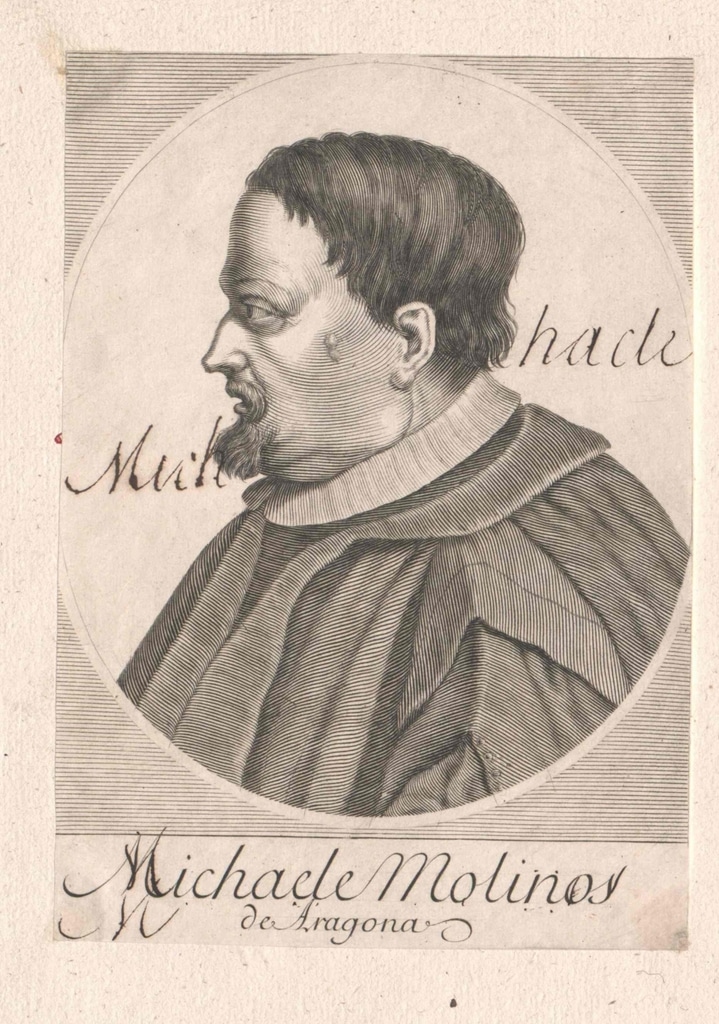
Miguel Molinos, the last heretic (Dutch audio drama) Rome, seventeenth century. At a time of religious unrest and sharp ecclesiastical control, a […]
Back from the road – Florida

Florida Was Wonderful I don’t love America as a power, but I adore Americans. The way they interact with each other—we cold Northern […]
About the writer
Other works by our writers
- June 2026 (2)
- May 2026 (1)
- February 2026 (2)
- January 2026 (1)
- December 2025 (2)
- November 2025 (5)
- October 2025 (6)
- September 2025 (4)
- August 2025 (12)
- July 2025 (2)
- March 2025 (3)
- December 2024 (8)
- November 2024 (5)
- April 2024 (32)
- January 2024 (1)
- December 2023 (1)
- February 2022 (13)
- December 2021 (5)
- November 2021 (4)
- May 2021 (1)
- February 2021 (3)
- January 2021 (5)
No comments have been posted yet!