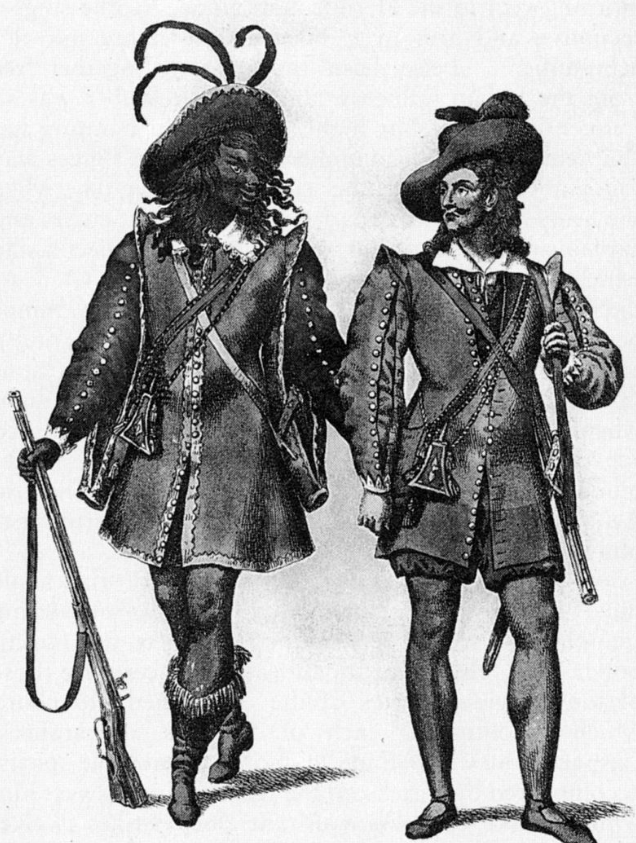
Der Freischütz in a new look
Reading time: 4 minutes.
Weber’s work
Der Freischütz, composed in 1821 by German composer Carl Maria von Weber (Eutin 1786 – London 1826), is considered a milestone in German operatic history. The work is often considered the first true romantic opera – not only because of its rich orchestration and folk motifs, but also because of its subject matter. Whereas classical opera often looked at gods or kings, it turned Der Freischütz to ordinary people – farmers, hunters, young lovers – in a world where irrationality and fear are never far away. That makes the work relevant to this day: it shows how easily people in their uncertainty are susceptible to manipulation, superstition and radical choices. The plot is simple but layered. The young hunter Max wants to marry Agathe, but must first win a shooting contest to do so. Fearing failure, he makes a pact with the demonic figure Kaspar, who helps him create “free bullets” – bullets that always hit their mark. One of them, however, is guided by the devil himself. The result is a seemingly fateful denouement, which – depending on the direction – ends in redemption or destruction.
In his time, Der Freischütz a strikingly innovative work. Weber wrote the opera in a Germany that did not yet have political unity, but was yearning for a shared cultural identity. His music expressed that quest: by combining folk music, traditional motifs and a strong sense of atmosphere, he helped shape what would later be called the “German soul. At the same time, he experimented with the orchestra in ways that were equally unique at the time. A good example of this is the famous Wolfsslenk scene (also known as the ” Wolfsschlucht“), in which Max casts the magic bullets together with Kaspar: a hallucinatory passage full of thunder, whispers and orchestral tension that draws the listener into a feverish dream world.
Der Freischütz in Antwerp?
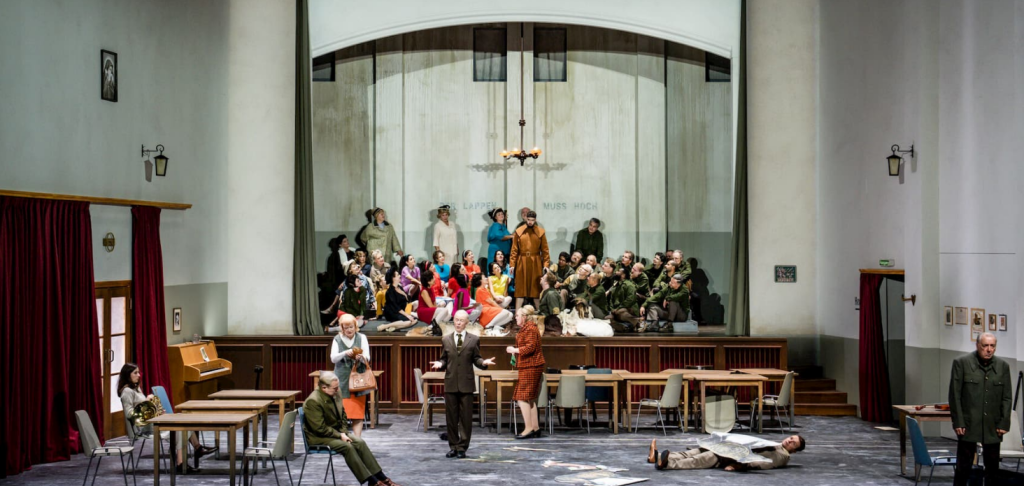
The performance in Antwerp which I attended last month was a highly modernized interpretation Weber’s Der Freischütz. From the first scene, there was an oppressive atmosphere. A little Kafka, a little patronage drama. Flanders in the 1950s or 1960s, with all its vestimentary gloom. I found it particularly recognizable. The setting had something claustrophobic: everything took place inside. Only during the casting of the bullets during the Wolfsslenk scene was there a brief look outside – a brief moment to sniff a lurid outdoor air with sulfur smell. At the back of the Stage was a second playing surface, closed with a curtain. Only later did it open: there stood the choir, tightly arranged – women on the left, men on the right – as if in a church singing position. They sang impressively well. The orchestra remained restrained, bound, precise. Everything was in service of the tight line of direction. Many scenes, however, had been moved, omitted or rewritten. New spoken text had been added, including a passage that reproduced almost verbatim the discourse of the extreme right. This was both relevant and pertinent – though this comes across as a pleonasm. Yet this performance was no simple updating. It evoked something deeper: an atmosphere, a climate of closeness, of moral rigor and silence. A world that many will recognize from their youth – and which at the same time is palpable again today. Not literally, but in tone. In the distrust. In the ease with which enemy images are created.
Want to read more?
Performance website: https://www.operaballet.be/nl/programma/seizoen-2024-2025/der-freischutz
Listen to the overture by SWR Symphonieorchester: https://www.youtube.com/watch?v=QMSteKA1a_s
Source images, respectively. Wikimedia Commons & operaballet.com

Latest contributions
Introducing Miguel Molinos, the Last Heretic
Introducing Miguel Molinos, the Last Heretic – by Dirk van BABYLON (English translation) Miguel Molinos, the Last Heretic Rome, seventeenth […]
Miguel Molinos, the last heretic
Miguel Molinos, the last heretic (Dutch audio drama) Rome, seventeenth century. At a time of religious unrest and sharp ecclesiastical control, a […]
Back from the road – Florida
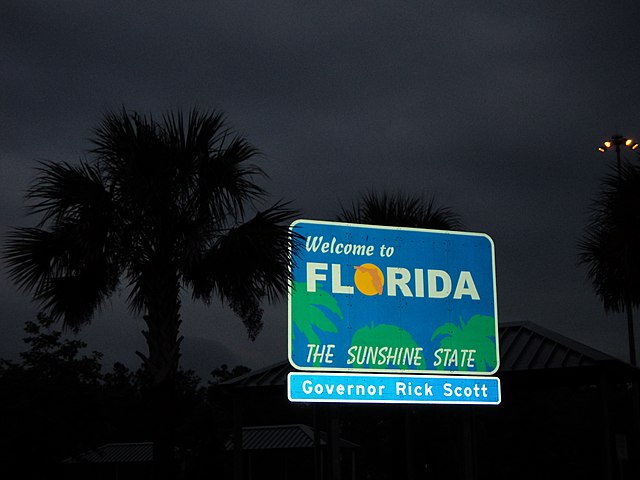
Florida Was Wonderful I don’t love America as a power, but I adore Americans. The way they interact with each other—we cold Northern […]
All writers
- Hanna Brems
- A Portrait of Erembodegem, a Belgian village
- ADHD
- Advice from the doctor
- African poetry
- AIDS activism and gay emancipation
- Allergie
- Bibliography of Chris
- Bibliography of Olivier
- Bibliography of Patrick
- Biography of Chris
- Biography of Olivier
- Biography of Patrick
- Blackout poetry
- Blogs
- Chris' Stage
- Columns
- Covid
- Dirk van Babylon Newsletter
- Double calling
- Essays
- Essays of Olivier
- Fragile light
- Hanna's Mind Wanderings
- Incapacity for work
- Late Pasquino's
- Lectures
- LEIF doctor
- Liechtensteiner
- Medical newsletter
- Memoirs of a general practitioner
- Miguel Molinos
- Moctines
- Musings
- Myriad
- Patrick's Stage
- Practice in Erembodegem
- Resignation
- Short Stories
- Sleep problems
- Sonnets
- Sprokkelmaand
- Substance abuse and addiction
- Synchronicities
- Travel
- Uncategorized
- Vi to
- Vögels
- Voluntary euthanasia
- Weltschmerz
- Wormwood or The dose makes the poison
- Pixel Savant
- A Portrait of Erembodegem, a Belgian village
- ADHD
- Advice from the doctor
- African poetry
- AIDS activism and gay emancipation
- Allergie
- Bibliography of Chris
- Bibliography of Olivier
- Bibliography of Patrick
- Biography of Chris
- Biography of Olivier
- Biography of Patrick
- Blackout poetry
- Blogs
- Chris' Stage
- Columns
- Covid
- Dirk van Babylon Newsletter
- Double calling
- Essays
- Essays of Olivier
- Fragile light
- Hanna's Mind Wanderings
- Incapacity for work
- Late Pasquino's
- Lectures
- LEIF doctor
- Liechtensteiner
- Medical newsletter
- Memoirs of a general practitioner
- Miguel Molinos
- Moctines
- Musings
- Myriad
- Patrick's Stage
- Practice in Erembodegem
- Resignation
- Short Stories
- Sleep problems
- Sonnets
- Sprokkelmaand
- Substance abuse and addiction
- Synchronicities
- Travel
- Uncategorized
- Vi to
- Vögels
- Voluntary euthanasia
- Weltschmerz
- Wormwood or The dose makes the poison
About the writer
Other works by our writers
- June 2026 (2)
- May 2026 (3)
- March 2026 (2)
- February 2026 (2)
- January 2026 (1)
- December 2025 (3)
- November 2025 (11)
- October 2025 (7)
- September 2025 (4)
- August 2025 (21)
- July 2025 (2)
- June 2025 (1)
- May 2025 (1)
- March 2025 (3)
- December 2024 (8)
- November 2024 (5)
- June 2024 (1)
- May 2024 (1)
- April 2024 (58)
- January 2024 (1)
- December 2023 (1)
- February 2022 (13)
- December 2021 (5)
- November 2021 (4)
- May 2021 (1)
- February 2021 (3)
- January 2021 (5)
- December 2020 (1)
- February 2019 (1)
No comments have been posted yet!